Biocracked
←

#metabolic syndrome

2 articles
Approach 1, macro science, with palette D, a bold color field.

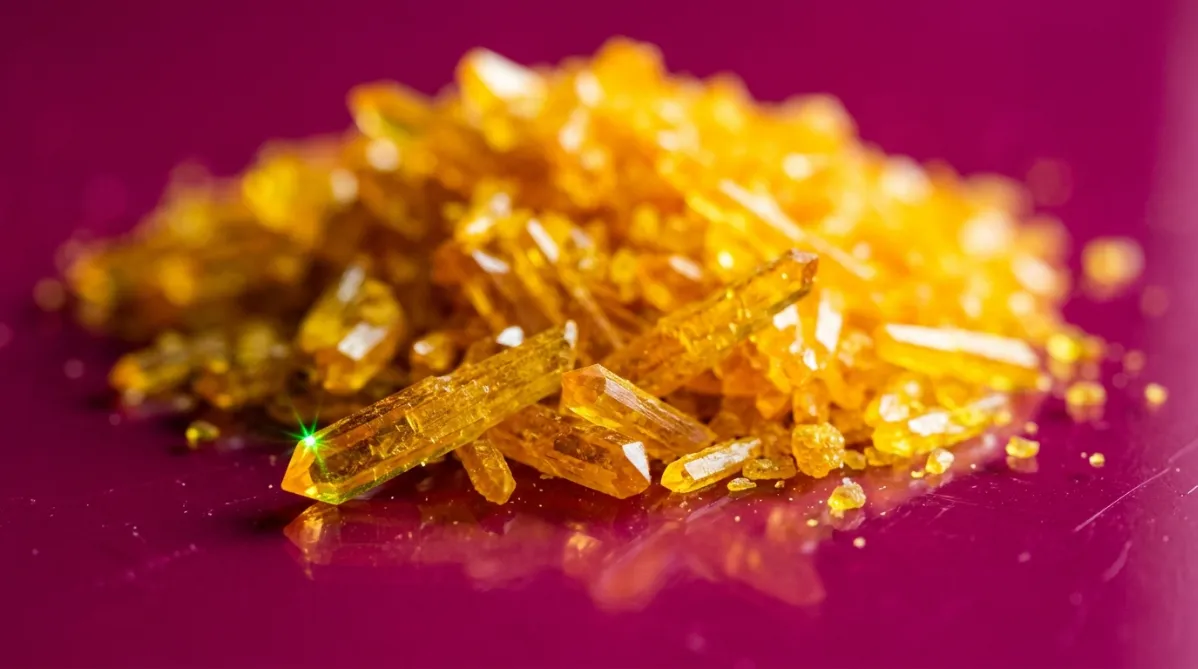
Extreme close-up photograph of raw berberine crystals, a vivid saturated yellow-orange powder of needle-like crystalline shards, heaped in a small mound on a glossy deep magenta acrylic surface. A few individual crystals are in sharp focus in the foreground, showing their faceted, translucent edges, with the rest of the pile softly blurred behind. Camera is low, about 20 degrees above the surface, with a shallow macro depth of field. Lighting is a single soft studio key from the upper left, with a crisp highlight along the crystal edges and a gentle magenta reflection beneath the mound. One tiny electric green glint of reflected light sits on a crystal tip. The mood is vivid, precise and slightly provocative, with a clear contrast between the yellow subject and the magenta field. There is no text anywhere in the frame.
supplements

“Ozempic da Natureza”? Berberina acerta 6 em 6 testes de lipídios – mas tem um problema

BY NOVA CHEN ·

Nas redes sociais, a berberina já é chamada de “Ozempic da natureza”, mas o que a ciência realmente demonstra? Uma revisão de 2025, que reuniu 54 revisões sistemáticas e analisou 70 desfechos de saúde, mostrou melhorias em todos os seis parâmetros de colesterol e em cerca de 93 % dos desfechos de diabetes tipo 2. O ponto fraco foi a obesidade, e 45 das 54 revisões foram avaliadas como de qualidade muito baixa. A seguir, veja o que a evidência realmente sustenta, como a berberina costuma ser dosada e quem deve evitá‑la.
Approach: Macro science. Palette: D, bold color field.

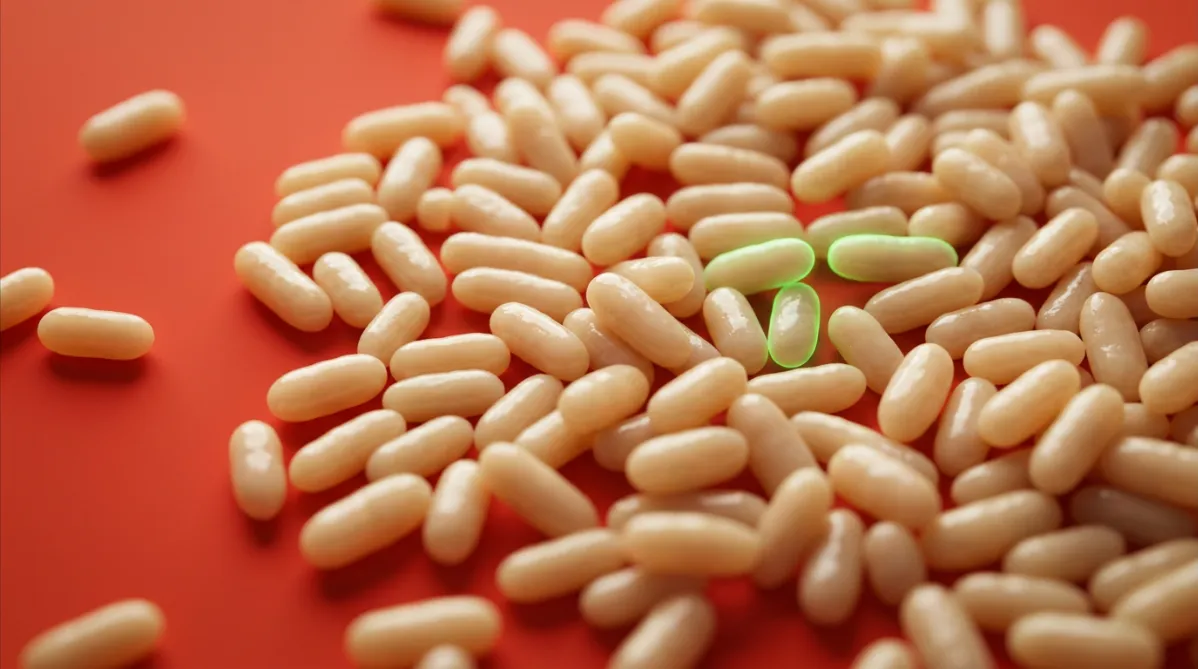
Extreme close-up microscopy-style image of a dense cluster of oval, rod-shaped bacteria with a slightly mucous, glossy membrane texture, shot from a shallow top-down angle with a razor-thin focal plane. Most of the colony sits in the sharp center, softening into creamy blur at the edges. The cells are warm ivory with subtle translucent depth, resting on a saturated tomato-red backdrop. A scattering of sparser, isolated cells on one side suggests "low baseline" and hints at the subgroup story. One or two cells carry a faint electric green (#00e676) fluorescent rim glow. Lighting is soft, directional studio light with gentle specular highlights on the cell walls and clean shadows in warm red tones. Mood: curious, precise, quietly skeptical, with a vivid but grounded look. No text and no blue cast.
supplements

Akkermansia não atingiu seu objetivo principal — exceto em quem a tinha em falta

BY NOVA CHEN ·

Uma bactéria intestinal pasteurizada, frequentemente anunciada como "potenciador natural de GLP‑1", acabou de ser testada em um ensaio duplo‑cego com 142 participantes e não atingiu o desfecho primário de sensibilidade à insulina. Contudo, análises exploratórias mostraram um aumento do GLP‑1 após a ingestão de glicose, e indivíduos com baixos níveis basais de Akkermansia apresentaram melhora na sensibilidade à insulina e redução da gordura troncular. Esses resultados de subgrupos são geradores de hipóteses, ficam próximos do limiar de significância e vêm de um estudo com forte envolvimento da indústria. A seguir, o que os dados revelam, o que eles não mostram e quem pode se interessar.

This page is available in